
Grow: The Difference Between Rest and Avoidance (A Conversation With My Son)
by Scott
I had this conversation with my son Matthew this weekend that I can’t stop thinking about. It started casually, but one thing he said landed with surprising weight: “We can’t ignore difficult situations just because they are hard.”
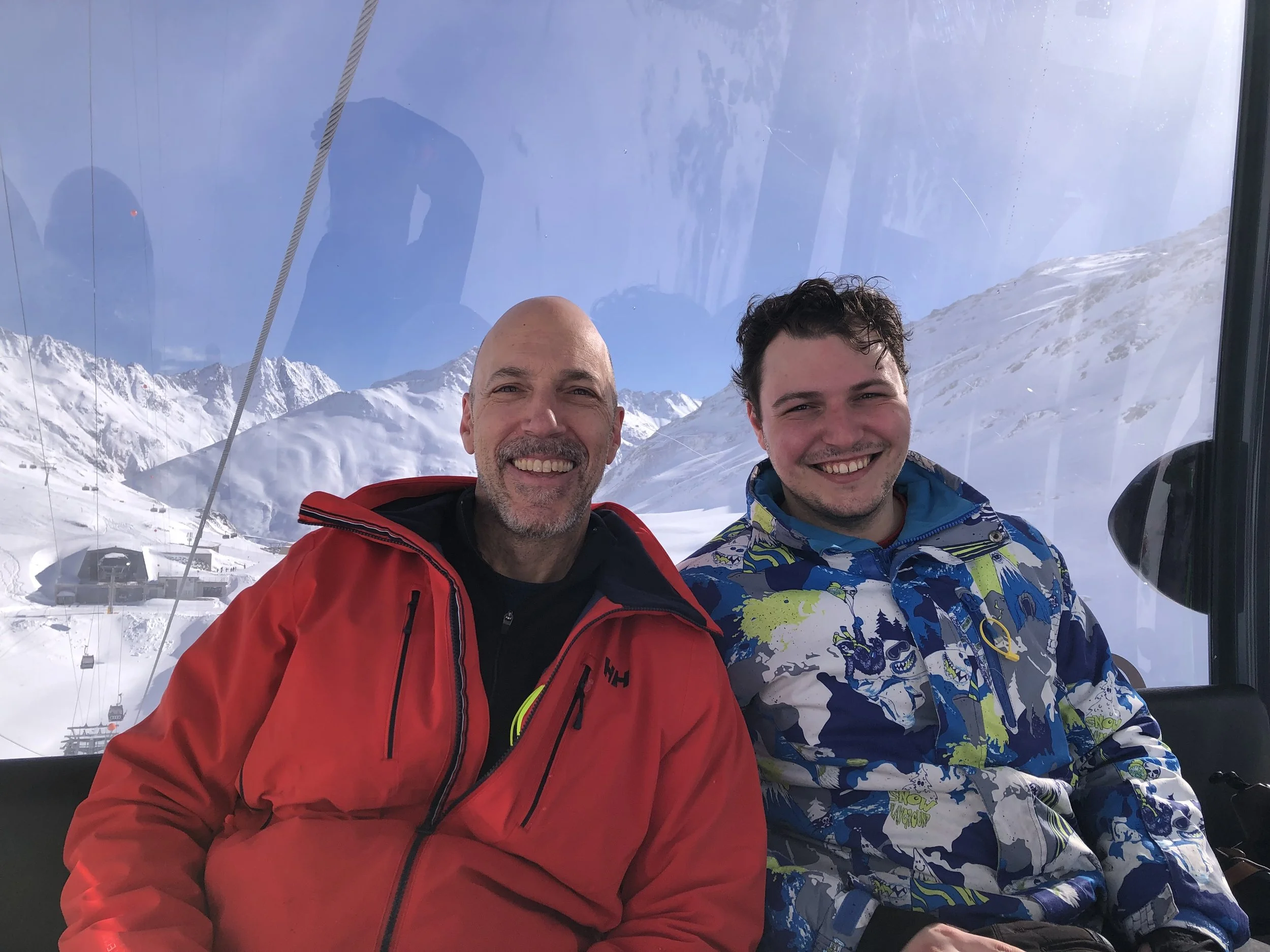
That sentence pulled a thread I’ve been tugging on for years. It reminded me of the “just start” advice that I shared in a Linkedin newsletter, but with a twist. “Just start” is about inertia and fear of the blank page. This was about something slightly different: the quiet, subtle ways we avoid the work that really matters. Not because we’re lazy, but because hard things expose something about us.
Two Kinds of Avoidance
For me, avoidance tends to show up in two flavors.
The first is being “afraid of hard.” The work is within your capabilities, but you don’t want to feel the discomfort: the stretch, the uncertainty, the possibility of falling short. This version of avoidance has probably limited more people’s success than any lack of talent or opportunity. Everything truly good in my life - career moments, moves across continents, races I wasn’t sure I could finish - has lived on the other side of something that felt hard. Every time you push through, you build a kind of muscle memory for courage. The next “hard” looks a little less intimidating because you remember how it felt to get to the other side last time.
The second version is different. It’s when you’re not actually equipped to do the thing, so you quietly opt out before you even start. You tell yourself: “I don’t know how to do this, so why even bother.” In those moments, the answer isn’t to grind harder. It’s to step back and change your role. Instead of trying to be the whole project, become the coordinator of the project. Identify the skills you’re missing, go learn them, or find the people who already have them and bring them in.
My son used an example from the comic book project he is leading. He is the writer, but the project needs an illustrator as well. He could either stall trying to become a passable illustrator and do everything himself, or he could own the project as creator and coordinator and bring in someone whose talent fills that gap. In the latter scenario, the project moves faster. His energy is spent on what he excels at – creative writing and project management - instead of allocating his time to areas that others can do more efficiently. That framing, putting yourself above the project and orchestrating the pieces, is a skill that matters whether you’re in your 20’s or, ahem, older 😀.
And Another Thing…
But there was a second part of our conversation that mattered just as much: the idea of “taking the moments.” He was talking about intentionally making space for the things that refill your tank. I told him I agree with that completely, maybe more than he realizes.
There have been moments in my career when the only way I knew to reset was to quit my job – which I’ve done four times. That’s not what I’m recommending, and I know it’s an extreme lever to pull. But looking back, every time I stepped away, I eventually came back stronger, clearer, more engaged. Those were my versions of hitting the emergency brake when I’d driven too far into burnout or simply got bored.
As I’ve gotten older, I’ve also tried to find less dramatic ways to do the same thing. What I’ve learned is that recovery can’t just be “what’s left over” once the work is done. If you treat rest as optional, it will always lose to urgency. When you treat rest as a scheduled, non‑negotiable part of your day, your productivity and clarity go up, not down.
A 45-minute workout can unlock a better two hours of thinking than white-knuckling your way through 2 hours and 45 minutes of anxious “work.” Research continues to show that even short bouts of exercise can improve cognitive performance, focus, and mood in ways that spill over into the rest of your day. I’ve felt that in my own life. I walk back from a run or a gym session and problems that felt heavy suddenly look…sortable. The to‑do list is the same, but my mind isn’t.
The same goes for a 30-minute TV show, a chapter of a book, sitting on the couch with someone you love, or doing absolutely nothing. That tiny act of stepping away can reset your perspective enough to see the path through whatever was blocking you. The trick - and this is where I still get it wrong some days - is making a deal with yourself:
These moments are scheduled, not stolen.
They are limited in time, not open-ended.
And when they end, I go all in on the work.
Rest and avoidance can look similar from the outside. The difference is in the intention. One says, “I’m refueling so I can do the work.” The other says, “If I stay here long enough, maybe the work will go away.” Only one of those moves your life forward.
What stayed with me after that conversation with my son wasn’t just the content, but the fact that we were having it at all. We were talking openly about fear, about limits, about how to build a life that isn’t just about grinding but also isn’t just about comfort. That feels like the real work of every stage of a career, and every stage of being a parent, a partner, a human.